From Legionnaires to Emperors: The Roman Story of Belgrade
Belgrade, one of the oldest cities in Southeast Europe, was known in antiquity as Singidunum. Its history under Roman rule began in the 1st century AD, around 75 AD, and lasted until 441 AD, when the city was destroyed during the invasion of the Huns. Although the exact origin of the name Singidunum is still debated, historians generally connect it to the Celtic tribe of the Singi, who lived in the area before the Romans arrived.
Once the Romans took control, Singidunum quickly became more than just a settlement. By 86 AD, it had developed into an important frontier city on the Roman limes—a vast defensive system marking the empire’s borders. Stationed there was the powerful Legio IV Flavia Felix, a unit of around 6,000 soldiers. This legion didn’t just stay in one place—it took part in major military campaigns across the empire, from battles against Germanic tribes in the north to the famous Dacian and Persian wars.
Interestingly, the name of this legion may sound familiar to modern audiences. In the movie Gladiator, the character Maximus Decimus Meridius—portrayed by Russell Crowe—is depicted as a commander of Roman forces in the northern provinces, as a "general of the Felix Legions".
But Singidunum was not only about soldiers and warfare. As the city grew in importance, it was granted the prestigious status of a colonia. This meant it was organized according to Roman laws and customs, with developed infrastructure, trade, and everyday urban life. In other words, it became a true Roman city.
Religion also played a key role in daily life. Among the most important deities worshipped in Singidunum were Jupiter, the supreme god of the Roman pantheon, and Hecate, a mysterious goddess linked to night, magic, and crossroads. While Hecate might sound intimidating, she was also seen as a protector—especially of travelers, women, and children—and was associated with healing and knowledge of herbs.
Archaeological discoveries give us a glimpse into this ancient world. Remains that belonged to a temple of Jupiter were found during construction work at the site of today’s National Bank of Serbia. Another temple, dedicated to Hecate, stood at what is now the intersection of Jevremova and Princess Ljubica streets—an appropriate location, given her connection to crossroads.
Like all Roman cities, Singidunum had public baths, known as thermae. These were much more than places to wash—they were centers of social life, relaxation, and even recovery. The largest bath complex in Belgrade was discovered in 1968 at Students’ Square, near the Faculty of Philosophy. For a city with a strong military presence, such facilities were especially important.
Singidunum also has an imperial connection—it was the birthplace of the Roman emperor Jovian, born in 331 AD. Although his reign lasted less than a year, he remains one of 17 Roman emperors born on the territory of modern-day Serbia, which speaks to the region’s significance within the Roman Empire.
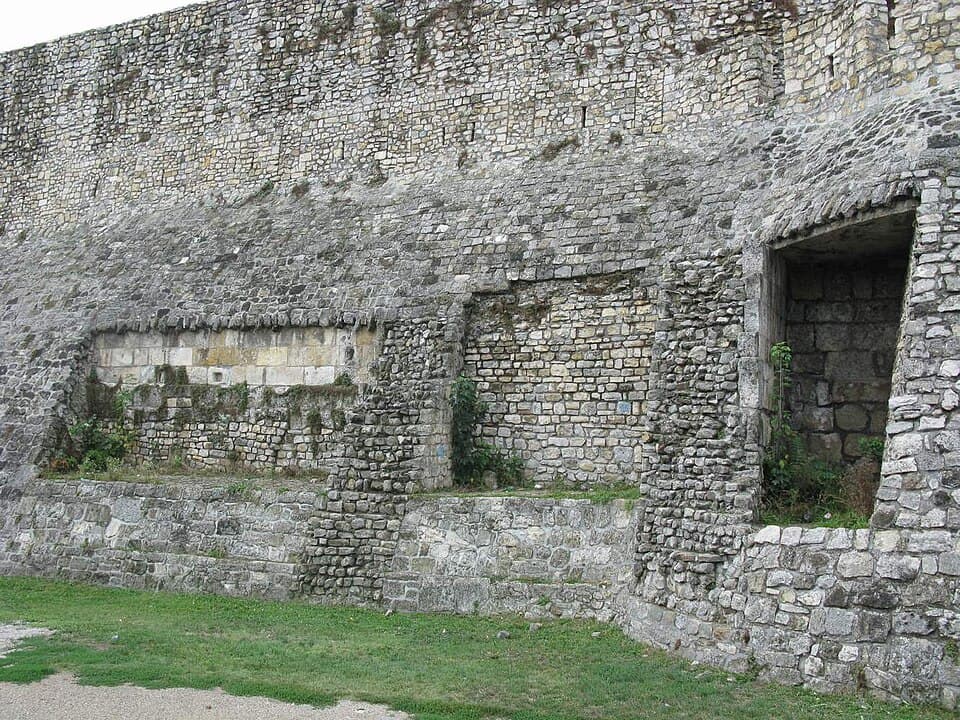
Today, traces of Roman Singidunum are still visible across Belgrade. You can spot them along Knez Mihailova street and within the Belgrade Fortress. One particularly interesting site is the Great Gunpowder Magazine, once a Mithraic temple dedicated to the god Mithras, and now a lapidarium displaying Roman tombstones, altars, and sarcophagi. For those curious to explore further, the National Museum and the Military Museum offer a closer look at artifacts from this fascinating period.