
The Five Bombings of Belgrade in the 20th Century: A History of Resilience
Belgrade, the capital of Serbia, has endured a tumultuous history in the 20th century, surviving five separate bombings that reflect both the geopolitical upheavals of Europe and the resilience of its people. The city’s experience demonstrates the profound human, cultural, and infrastructural costs of war while highlighting Belgrade’s ability to rebuild and persevere.
1. The First Bombing: 1914 – Austro-Hungarian Attack (World War I)
The first bombing of Belgrade occurred in 1914, following the assassination of Archduke Franz Ferdinand in Sarajevo on June 28. Austria-Hungary issued an ultimatum to the Kingdom of Serbia, which demanded, among other points, the suppression of anti-monarchist publications, dissolution of nationalist organizations, and cooperation of Serbian authorities in judicial investigations led by Austro-Hungarian delegates. Points five and six, which infringed upon Serbia’s territorial integrity and sovereignty, were particularly unacceptable.
When Serbia failed to fully comply, Austria-Hungary initiated a military attack on June 28, 1914, marking the start of hostilities that would become World War I. This initial bombing primarily involved naval bombardments on the city. One of the vessels involved, the Bodrog monitor, survives today as part of the Military Museum in Belgrade, serving as a tangible link to this historical event. Despite being limited in scale compared to later campaigns, the 1914 bombing caused significant fear and disruption in Belgrade.
2. The Second Bombing: 1915 – Austro-Hungarian and Allied Campaign (World War I)
In 1915, the Austro-Hungarian army launched a much larger campaign against Serbia, now joined by German and Bulgarian forces. This campaign was far more extensive and destructive than the 1914 attack, involving both bombardments and ground offensives. The city of Belgrade was subjected to sustained artillery shelling and air raids, resulting in widespread destruction of infrastructure, civilian buildings, and cultural sites.
The 1915 campaign culminated in the occupation of Belgrade from October 1915 until November 1918, when the city was finally liberated by the Serbian army. These bombings, combined with military occupation, left a lasting mark on the city’s urban landscape and civilian population.
3. The Third Bombing: April 6, 1941 – Nazi Germany (World War II)
The third major bombing of Belgrade took place on April 6, 1941, under Operation Strafgericht, initiated by Nazi Germany. This attack followed the Kingdom of Yugoslavia’s withdrawal from the Tripartite Pact and the removal of Prince Paul from power. The Luftwaffe aimed to maximize destruction, striking early in the morning with Junkers Ju 87 Stuka planes.
The consequences were devastating:
- Estimated casualties: 2,274–4,000 civilians (German estimates: 1,500–1,700).
- Buildings destroyed: 627; heavily damaged: 1,601; partially damaged: 6,829.
- Ascension Church severely damaged during morning services.
- National Library of Serbia, housing 350,000 books, manuscripts, early printed works, and archival materials, was destroyed.
According to General Alexander Löhr, Hitler personally ordered the destruction of Belgrade, targeting the National Library specifically to erase the cultural identity of the Serbian people.
4. The Fourth Bombing: 1944 – Allied Bombing (World War II)
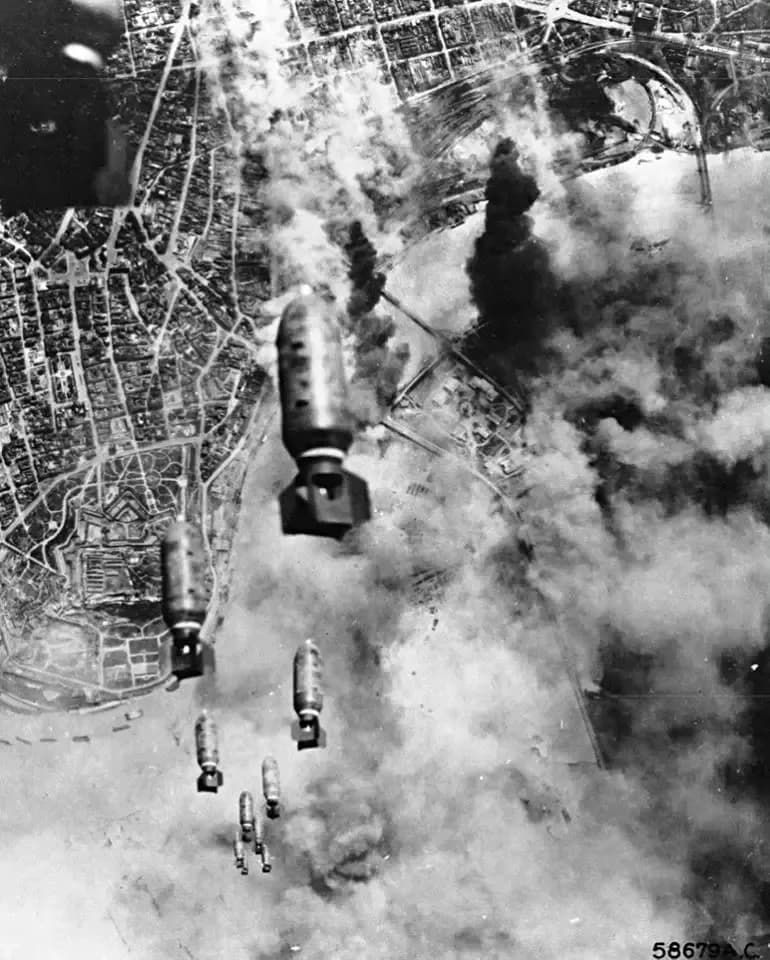
In 1944, Belgrade was again bombed, this time by Anglo-American forces, aiming to weaken the German occupation. Between April and September, the city was bombed eleven times, with the heaviest casualties occurring during the Easter bombings of April 16–17.
Approximately 600 bombers conducted “carpet bombing” from altitudes of 3,000–5,000 meters, striking both military and civilian targets without anti-aircraft defense. Critical infrastructure, hospitals, schools, residential areas, and cultural institutions were hit, resulting in an estimated 2,271–4,000 deaths.
5. The Fifth Bombing: 1999 – NATO Intervention
The final bombing of Belgrade occurred during the NATO campaign against the Federal Republic of Yugoslavia in 1999, lasting 78 days amid the Kosovo conflict. Despite assurances that civilians would not be targeted, extensive damage was inflicted on the city’s infrastructure, including ministries, hospitals, schools, power plants, and the Surčin International Airport.
Notable casualties included 16 employees of Radio Television of Serbia (RTS) and a young girl, Milica Rakić. Power and water supplies were disrupted due to attacks on thermal power plants, causing widespread civilian hardship.
Historical Patterns and Symbolism
An anecdotal connection links the bombings of 1941, 1944, and 1999: all occurred during Orthodox Easter, and on some occasions, bombs carried the inscription “Happy Easter”. This tragic coincidence underscores the recurring intersection of war and cultural observance in Belgrade’s history.
Belgrade stands out historically as the first and last European capital bombed in the 20th century. Each attack, while devastating, was met with resilience. The city rebuilt its infrastructure, preserved its cultural identity, and continued to thrive despite repeated attempts to destroy it.
Conclusion
Belgrade’s history of bombardment in the 20th century illustrates not only the tragedy of war but also the enduring spirit of its citizens. From the Austro-Hungarian attacks in 1914 and 1915 to the NATO strikes in 1999, the city has repeatedly risen from destruction, embodying the metaphor of a phoenix—reborn from the ashes, resilient and vibrant.